Widowhood
Her First Werewolf (BBW, Werewolf, Prince Charming, Fairy Tale Romance)Widowhood is presented as a continuing household condition rather than a single moment of grief. After Flora’s father dies when she is fifteen, Morgan must endure the loss while managing a farm and raising her daughter under the shadow of a false werewolf story. Her widowhood changes the family’s standing, intensifies economic insecurity, and informs her determination to place Flora in a secure marriage.
Origin and Material Consequences
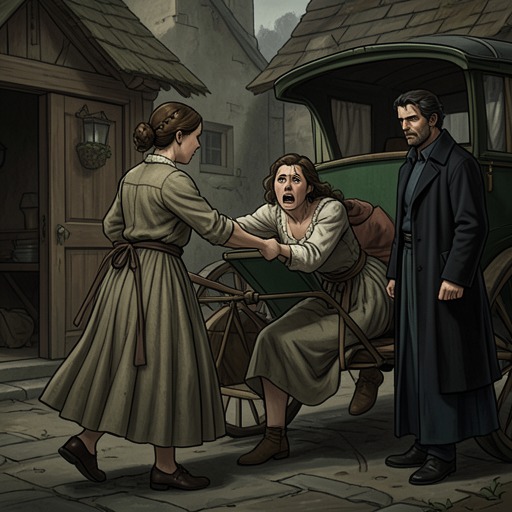
Flora’s father dies when she is fifteen, and the townspeople believe that a Werewolf killed him. The rumor makes the loss more frightening and isolates the household: for the first few years, townspeople keep away from the farm because they are afraid. The truth is more ordinary and no less painful, since a bear attacked him. The contrast between public legend and private knowledge leaves Morgan and Flora living with grief that is surrounded by superstition.
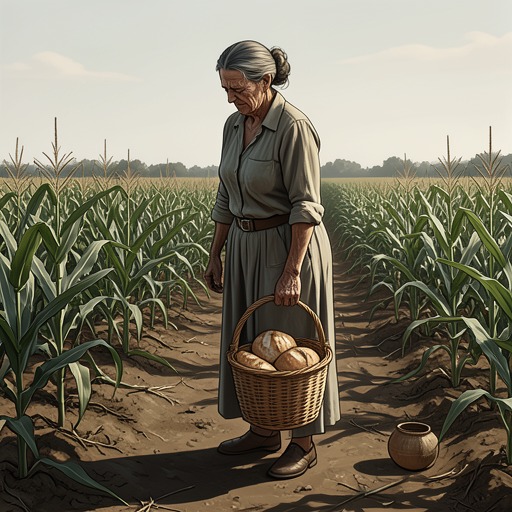
The death also alters the family’s labor and prospects. Flora spends her days milking dairy cows, cleaning stalls, working in the fields, and helping Hans, while Morgan’s body visibly bears the effects of time and hard work. Flora recalls that her mother had once been the town beauty, with dark hair and blue eyes, but now looks increasingly withered and hunched. Widowhood therefore appears not only as emotional absence but as a physical and economic transformation of the surviving household.
Morgan’s Memory of Marriage
Morgan’s understanding of widowhood is inseparable from her memory of the marriage she lost. Flora’s father came from a wealthy family, possessed many books, and had been able to marry for love when he met Morgan, despite objections to the match because Morgan was poor. His choice treated love as more important than class, and his affection gave Flora a model of marriage associated with safety, learning, and emotional protection.
Flora remembers her father holding her tightly at the end of the day and making her feel safe and loved. He taught her to read, to think independently, and to observe body language when communicating with others. His death thus removes not merely a husband from Morgan’s life but also the person who helped make Flora intellectually independent. Morgan’s later insistence that Flora should marry well is shaped by the changed circumstances that followed his death, even though Flora experiences that insistence as a threat to the freedom her father taught her to value.
Widowhood and Pressure to Marry
Morgan repeatedly tells Flora that her father would have wanted to see her settled and married well. She argues that being a single young woman is dangerous and that marriage offers protection in a difficult world. When a party is announced at the town hall, Morgan treats it as an opportunity to change Flora’s future, especially because distinguished men are expected to attend, including a widowed serviceman connected with the Royal Army and other figures of rank.
Flora resists this interpretation of security. She says that she enjoys her freedom and worries that marriage might prevent her from reading or thinking for herself. Morgan nevertheless continues to imagine marriage as the practical answer to the family’s vulnerability. Her plotting around the party, a dress, and a potentially advantageous match shows how widowhood converts affection and anxiety into social strategy.
Morgan’s plan leads her to send Flora to her wealthy grandmother’s house beyond the forest. Flora is given a cloak and a basket and is instructed to ask for help indirectly so that the request will seem to be the grandmother’s own idea. Flora agrees only because she knows what Morgan wants to hear, while feeling uncomfortable about asking an old woman for money for a dress. The episode reveals how the widow’s limited resources make clothing, courtship, and family connections part of the struggle for security.
Contrast with Flora’s Later Choice
Widowhood establishes the social logic that frames Flora’s later encounter with Charles. Morgan wants marriage to protect Flora from the dangers facing an unmarried woman, but Flora initially refuses marriage because she fears losing her intellectual and personal autonomy. Charles’s sudden proposal therefore enters a conflict already defined by the father’s death: Flora must weigh the freedom inherited from her father against the security Morgan believes marriage can provide.
Charles reveals that he is a Werewolf after transforming into a large black Wolf to kill a deadly snake threatening Flora. He then acknowledges his condition through a voice inside her head, expressing shame rather than denying what he is. Flora’s response is acceptance; she calls him a beautiful Wolf, says she is not afraid, and comforts him. Their exchange reworks the family’s original werewolf rumor. The supernatural figure once associated by the townspeople with death becomes, in Flora’s immediate experience, the person who saves her life.
Charles also promises to care for Flora if she is pregnant after their encounter and says that he wants to take her away from the farm. When she asks whether his declaration is a proposal, he confirms that it is and explains that his affliction gives him unusual freedom to choose whom he will marry. The proposal offers Flora a path away from the labor and constraints that widowhood has imposed on her household, although the narrative places that offer beside her earlier insistence that marriage must not destroy her ability to think and choose.
Narrative Significance
Widowhood links private mourning to larger questions of class, labor, gender, and protection. Morgan’s loss helps explain why she presses Flora toward marriage, while Flora’s resistance preserves the possibility that a young woman can define safety for herself rather than simply accept the arrangement others design. The condition also gives the family history a double structure: the father’s death is publicly mythologized as the work of a Werewolf, but the story later turns a Werewolf into Flora’s prospective partner.
In this way, widowhood remains an absent presence in the plot. It is the wound behind Morgan’s warnings, the reason the farm depends so heavily on Flora’s labor, and the memory against which Flora measures every promise of love. The narrative does not erase the loss when Charles appears; instead, it transforms the meaning of the fear surrounding it, moving from a widow’s account of danger and survival toward Flora’s contested attempt to choose a future beyond the life her father’s death left behind.